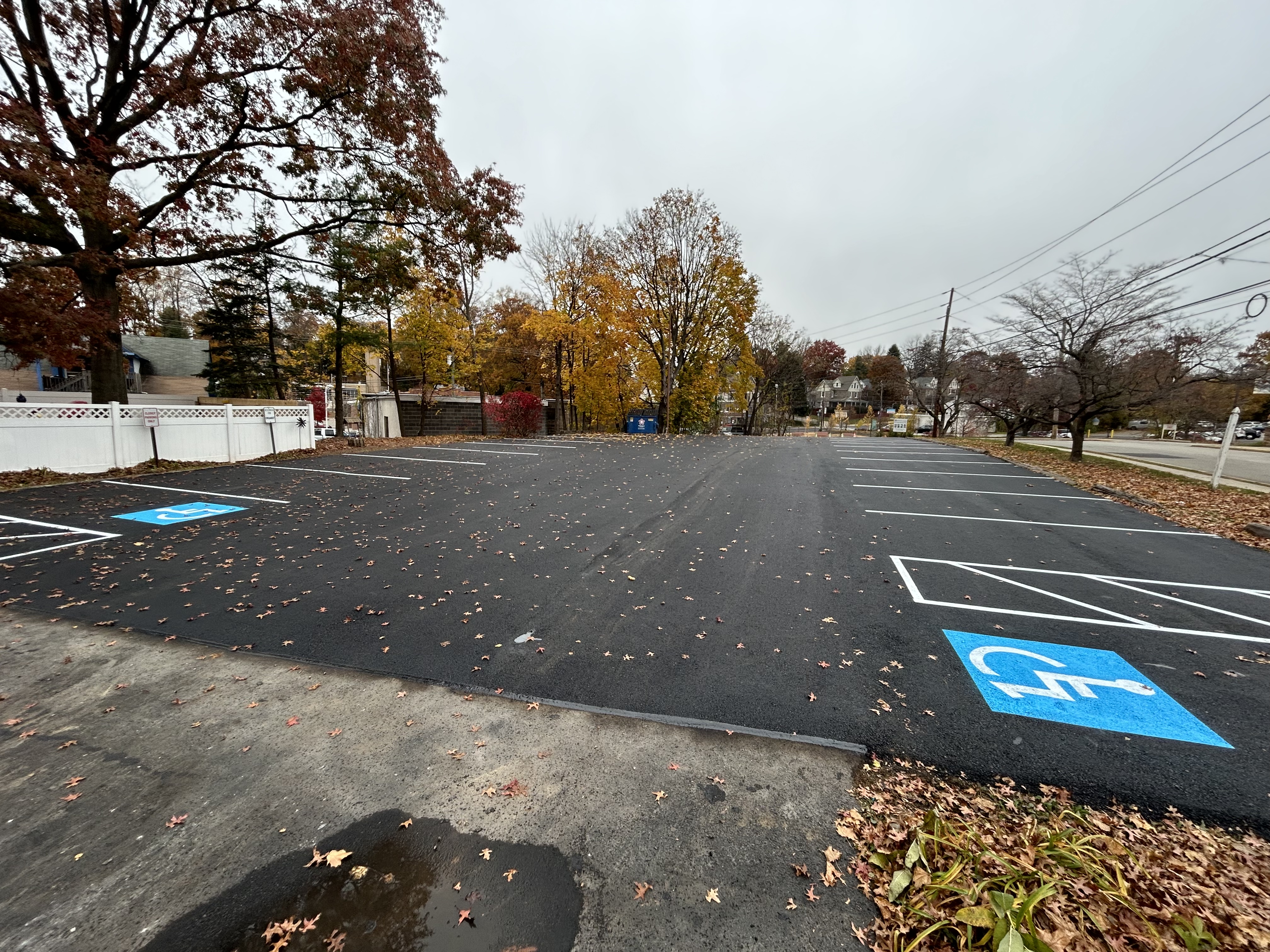
Commercial property owners who implement a simple asphalt maintenance program typically extend their parking lot lifespan by 40% to 60% compared to properties that wait for visible failure before acting. The difference is not complex — it is a matter of scheduling preventive care rather than reactive repairs. Here is the maintenance program we recommend for every commercial property in Bucks and Montgomery Counties.
Sealcoating: The Foundation of Preventive Maintenance
Sealcoating is the single most cost-effective maintenance procedure for asphalt surfaces. A quality coal tar or asphalt emulsion sealcoat applied every 2 to 3 years creates a protective barrier against UV radiation, oxidation, water intrusion, and chemical spills. The cost typically ranges from $0.15 to $0.25 per square foot — negligible compared to the $3 to $6 per square foot cost of resurfacing.
Timing matters. Sealcoat should be applied when temperatures are consistently above 50°F and no rain is forecast for 24 hours. In Pennsylvania, this means May through September for most properties. Spring sealcoating also refreshes the lot's appearance before summer customer traffic peaks.
Crack Filling: Stop Water Before It Destroys the Base
Cracks are not just unsightly — they are entry points for water. Every gallon of water that infiltrates through a crack accelerates base deterioration by washing away fines, creating voids, and weakening the structural support beneath the asphalt surface. Annual crack filling with hot rubberized sealant prevents this damage progression.
The best practice is to inspect and fill cracks every spring, after winter freeze-thaw cycles have opened any new cracks but before spring rains begin the infiltration cycle. For properties with high traffic volume or older asphalt, biannual crack filling in spring and fall provides even better protection.
Pothole Repair: Address Failures Immediately
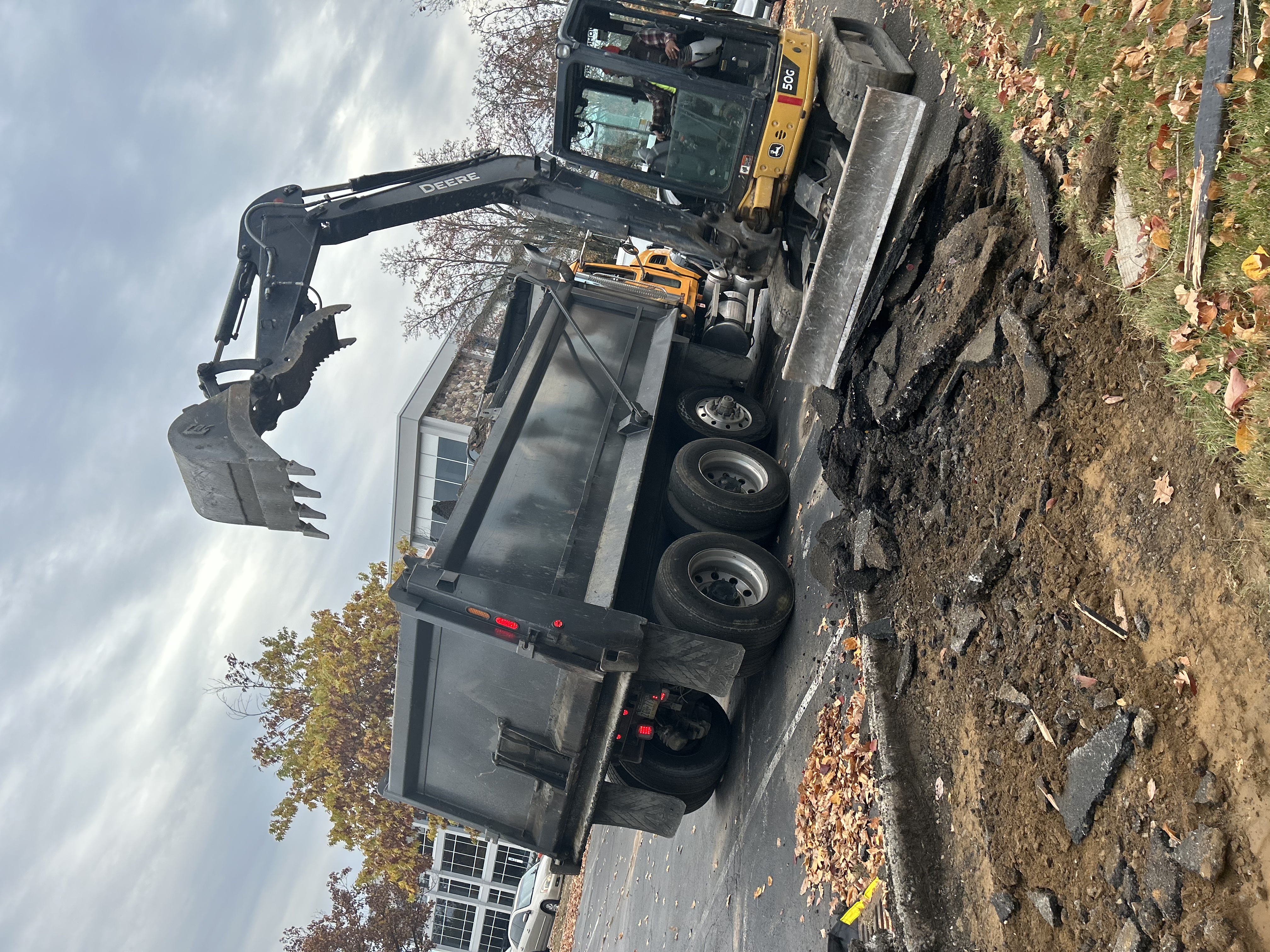
Potholes represent full-thickness asphalt failure where the surface and base have collapsed. They create trip hazards, vehicle damage liability, and rapid adjacent deterioration as water concentrates in the depression. Potholes should be repaired within 48 hours of discovery using saw-cut removal and hot-mix patching.
Temporary cold-patch materials are just that — temporary. They are acceptable for emergency winter repairs when hot-mix plants are closed, but must be replaced with proper hot-mix patches in spring. Properties that rely on cold-patch as permanent repair see the same potholes reopen within weeks.
Line Striping: Safety and Compliance Refresh
Line striping is part of maintenance, not just aesthetics. Faded or worn markings create parking confusion, traffic conflicts, and ADA compliance failures. We recommend restriping every 1 to 2 years, ideally immediately following sealcoating when the fresh black surface provides maximum contrast for new paint.
Restriping also provides the opportunity to update layout for improved traffic flow, add accessible spaces as requirements evolve, and refresh fire lane and no-parking markings that fade faster than standard parking lines.
Silvestera Paving offers comprehensive commercial maintenance programs including sealcoating, crack filling, pothole repair, and line striping for properties throughout Bucks County and Montgomery County. Our maintenance clients receive priority scheduling, volume pricing, and annual condition assessments that identify problems before they become expensive failures.
Enroll In Our Maintenance ProgramRelated Articles
Planning A Paving Project?
Whether you are budgeting for next season or need urgent repairs, Silvestera Paving works with property owners across Bucks County and Montgomery County to phase projects, coordinate financing timelines, and deliver premium results within your budget.