
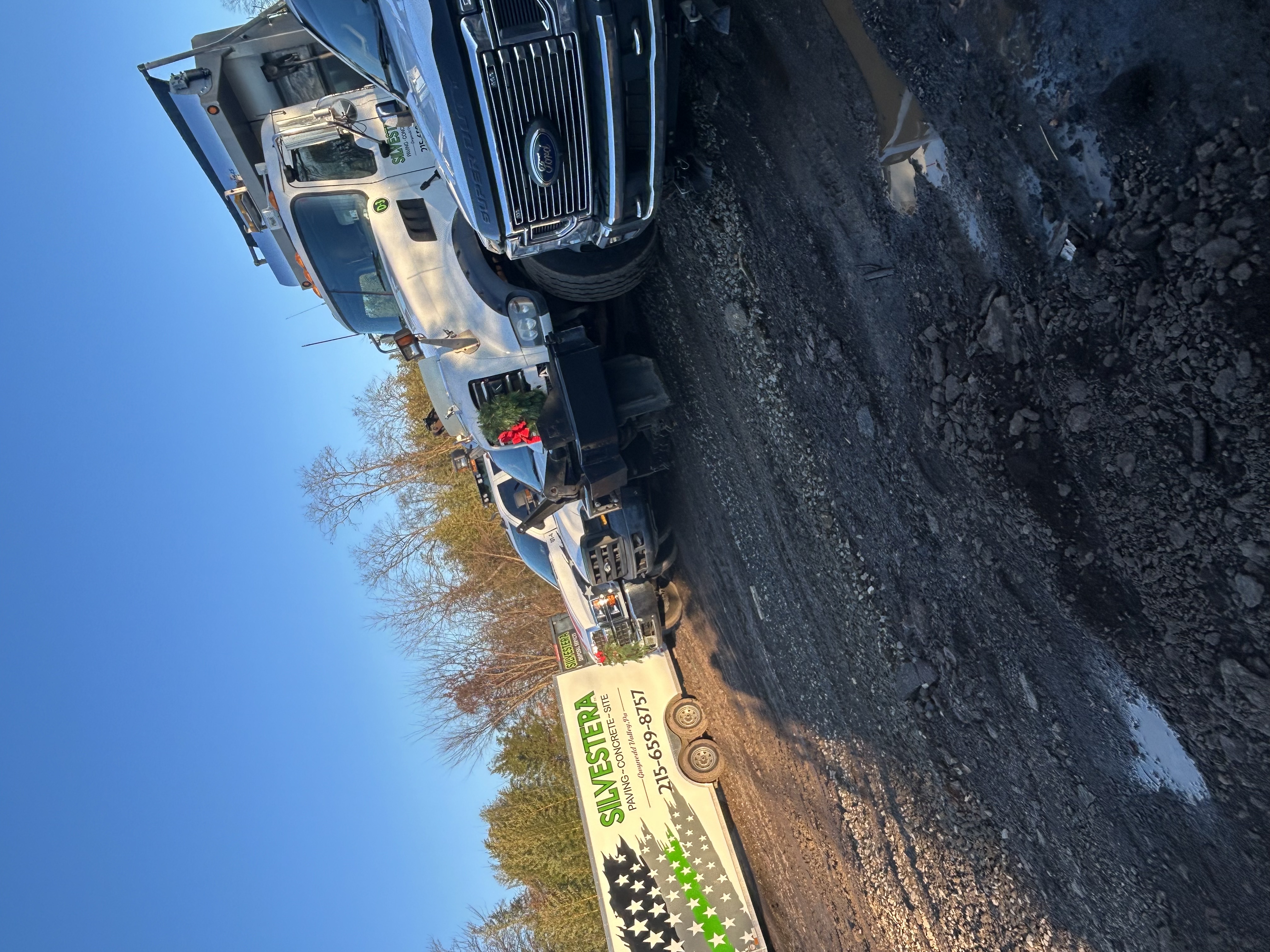
Every commercial property manager eventually faces the same decision: concrete or asphalt for their next paving or flatwork project. The answer depends on traffic loads, environmental exposure, budget constraints, maintenance capacity, and the specific application. Making the wrong choice can cost tens of thousands in premature replacement or unnecessary maintenance.
Cost Comparison: Initial Investment vs Lifecycle Cost
Asphalt typically costs 40% to 60% less than concrete per square foot for initial installation. A commercial parking lot that costs $45,000 in asphalt might cost $75,000 to $90,000 in concrete. However, concrete lasts 30 to 40 years with minimal maintenance, while asphalt requires sealcoating every 2 to 3 years, crack filling, and eventual resurfacing or replacement every 15 to 20 years. Over a 40-year lifecycle, the total cost often converges.
For properties with limited maintenance budgets or where upfront capital is constrained, asphalt provides better short-term value. For properties planning long-term ownership with stable maintenance funding, concrete's durability and lower maintenance demands often deliver better lifetime economics.
Load Capacity and Traffic Type
Concrete withstands heavy point loads better than asphalt. Loading docks, dumpster pads, and industrial yards where forklifts, trash trucks, or tractor-trailers operate should almost always be concrete. Asphalt deforms under sustained heavy loading and high tire pressures, creating ruts and edge breakdown that require constant repair.
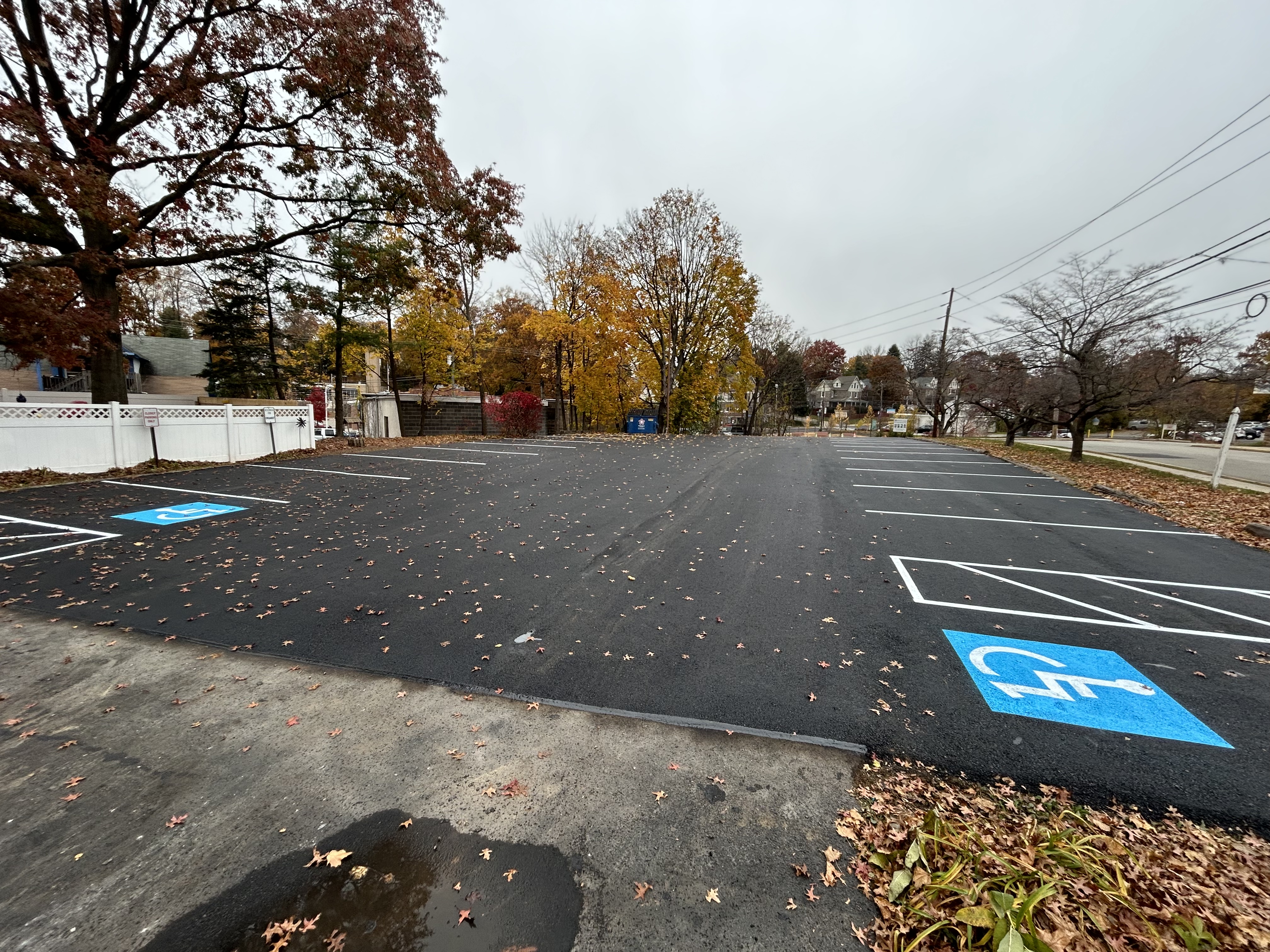
For passenger vehicle traffic — retail parking, office complexes, medical facilities — asphalt performs excellently and provides the smoother, quieter surface that enhances customer experience. The key is matching the material to the actual traffic loads rather than defaulting to one material for all applications.
Climate and Pennsylvania Conditions
Pennsylvania's freeze-thaw cycles affect both materials, but differently. Asphalt flexes with thermal expansion and contraction, making it more tolerant of ground movement. However, it is vulnerable to water infiltration through cracks. Concrete is rigid and can crack from frost heave if control joints are improperly spaced or base preparation is inadequate.
Salt and de-icing chemicals also affect both materials. Asphalt is generally more chemical-resistant. Concrete surfaces can experience surface scaling from repeated salt exposure unless properly air-entrained and sealed. For properties in high-snow regions of Bucks and Montgomery Counties, this is a material selection consideration.
When to Combine Both Materials
The best commercial properties use both materials strategically: asphalt for parking areas and access drives where flexibility and cost matter, concrete for sidewalks, curbs, loading zones, dumpster pads, and structural flatwork where durability and load capacity are critical. This hybrid approach optimizes both performance and budget.
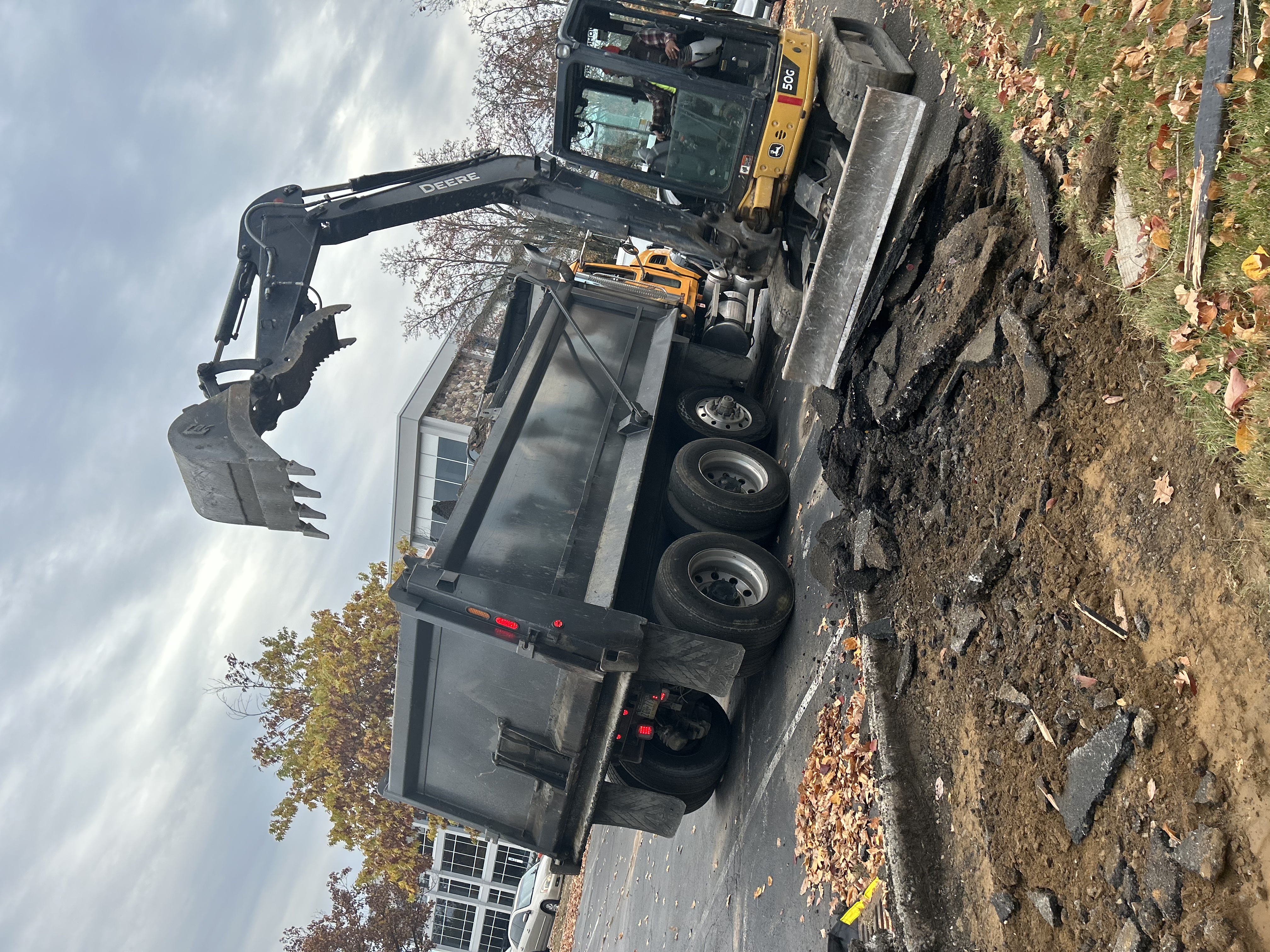
At Silvestera Paving, we provide both commercial asphalt and commercial concrete services. Our project managers evaluate each application independently and recommend the material that delivers the best long-term value for that specific use case — never pushing one material over another based on what is more profitable for us.
Need help deciding between concrete and asphalt for your commercial project? Our commercial division provides free evaluations that include material recommendations, lifecycle cost analysis, and phased construction planning for properties throughout Bucks County and Montgomery County.
Request A Commercial ConsultationRelated Articles
Planning A Paving Project?
Whether you are budgeting for next season or need urgent repairs, Silvestera Paving works with property owners across Bucks County and Montgomery County to phase projects, coordinate financing timelines, and deliver premium results within your budget.